
Why London's tech community should care about AI, cloud and digital sovereignty in 2026
Written by

Events Marketing Coordinator at Civo
Written by
Events Marketing Coordinator at Civo
London has spent decades establishing itself as one of the world’s major technology hubs. Its strength comes from the concentration of AI and technology startups, financial services and fintech, highly regulated industries, universities and research institutions, international businesses and technology companies, alongside a large community of developers and engineers.
AI is moving beyond experimentation and becoming part of the infrastructure businesses rely on. Cloud computing is evolving alongside increasingly demanding AI workloads, while GPUs and specialized compute are becoming more important to companies building and running these applications. At the same time, digital sovereignty is moving beyond policy discussions and into practical questions about how organizations build, deploy, and control the technology they depend on.
These are often treated as separate conversations. Increasingly, they are connected.
AI is becoming an infrastructure conversation
For the past few years, much of the AI conversation has focused on what the technology can do. Generative AI can write, analyze, generate code, automate workflows and support new products and services.
London’s startup and research ecosystem has been quick to experiment with these capabilities, while established businesses are exploring how to incorporate AI into their products and operations.
But AI has to run somewhere.
Behind every AI application are computing resources, storage, networking, data and infrastructure. As AI moves from experimentation into production, those underlying layers become increasingly important.

For a London startup, that can mean thinking about the cost and availability of compute alongside the product itself. London’s universities and research institutions also contribute to the talent and ideas driving AI development, creating a pipeline between research, startups and established technology companies.
For developers, infrastructure decisions can affect how an application performs and scales. For regulated organizations, questions around security, resilience and where data is processed can become even more significant.
The UK Government’s Cloud Challenge Book 2026 reflects this shift, identifying public digital infrastructure for an AI era, secure and resilient cloud, and the development of cloud and AI skills among its national-scale challenges.
London’s cloud dependency matters
Cloud computing has become fundamental to London’s technology economy. It supports startups building new products, financial institutions running critical services, international technology companies scaling globally and developers deploying applications without having to build physical infrastructure themselves.
AI is now changing some of the assumptions around that infrastructure.
AI workloads can require significant computing capacity, specialized hardware and large amounts of data. As companies move from experimenting with AI to running it in production, questions around cost, performance, resilience, and infrastructure architecture become harder to separate from business strategy.
This is particularly relevant in London because the city is home to financial services, fintech, and other highly regulated industries. For these organizations, infrastructure decisions are not simply about finding the fastest or cheapest way to run an application. Reliability, security, data management, and operational resilience can be equally important.
Where should different workloads run? How much flexibility does a business need? How dependent should an organization become on a single provider?
These questions increasingly span across engineering, product, and leadership teams.
Digital sovereignty is becoming a London technology question
Digital sovereignty can sound like a government or policy issue, but its underlying questions are practical.
Where is our data stored? Who controls the infrastructure our applications depend on? How reliant are we on a small number of providers? What would happen if pricing, policies, or availability changed? How difficult would it be to move our workloads?
These questions matter in London because technology underpins financial services, fintech, healthcare, government, professional services, and fast-growing startups. International businesses also operate across multiple jurisdictions from the city.
Digital sovereignty does not necessarily mean building every piece of technology domestically or avoiding global technology providers. It is about having enough control, choice and understanding to make informed decisions about critical technology dependencies.
For a London fintech building products for financial institutions, infrastructure choices can become part of a wider conversation around resilience, regulation and trust. For a rapidly scaling startup, the same questions might center on portability, cost and dependencies.
Where AI, cloud and sovereignty meet
This is where the three conversations become difficult to separate.
Consider a London startup developing an AI-powered financial product. It needs compute to run its models, infrastructure to deploy its application, storage and networking for its data, and potentially a combination of cloud platforms, APIs, open-source projects and third-party services.
Initially, those choices may simply be about getting the product working. As the business grows, they can become questions of cost, performance, security, resilience and control.
An AI decision can therefore become a cloud decision. A cloud decision can become an infrastructure decision. And an infrastructure decision can eventually raise questions about dependency and sovereignty.
London’s particular ecosystem makes this especially relevant. The city is simultaneously home to early-stage companies experimenting with emerging technologies, global enterprises running critical systems, highly regulated industries and research institutions developing the skills and ideas that will influence what comes next.
Infrastructure decisions made today can therefore influence both the next generation of startups and the resilience of established industries.
What does this mean for London’s developers, founders and technology leaders?
For developers, the technology stack is becoming broader. AI APIs, cloud infrastructure, Kubernetes, GPUs, data pipelines and security are increasingly interconnected.
For founders, infrastructure choices can become strategic as a company grows. The platform a startup builds on can influence cost, scalability, performance and flexibility, making infrastructure strategy worth considering alongside product strategy.
For technology leaders, the challenge is broader still: AI introduces new infrastructure requirements, cloud can create dependencies, and digital sovereignty adds questions around control and resilience.
What London’s technology community should be asking
Rather than trying to predict exactly what technology will look like five or ten years from now, it's more useful to ask a few questions today:
- How will AI change the infrastructure London’s technology companies depend on?
- How should businesses balance the speed and convenience of cloud adoption with long-term flexibility and resilience?
- How much control should organizations have over the infrastructure supporting critical applications?
- What skills will London’s developers need as AI, cloud and infrastructure become increasingly interconnected?
- And how can London maintain its position as a global technology hub while building greater resilience into the infrastructure its companies depend on?
- What happens next for London’s tech ecosystem?
In many ways, these are the questions that will define the next chapter of London’s tech ecosystem.
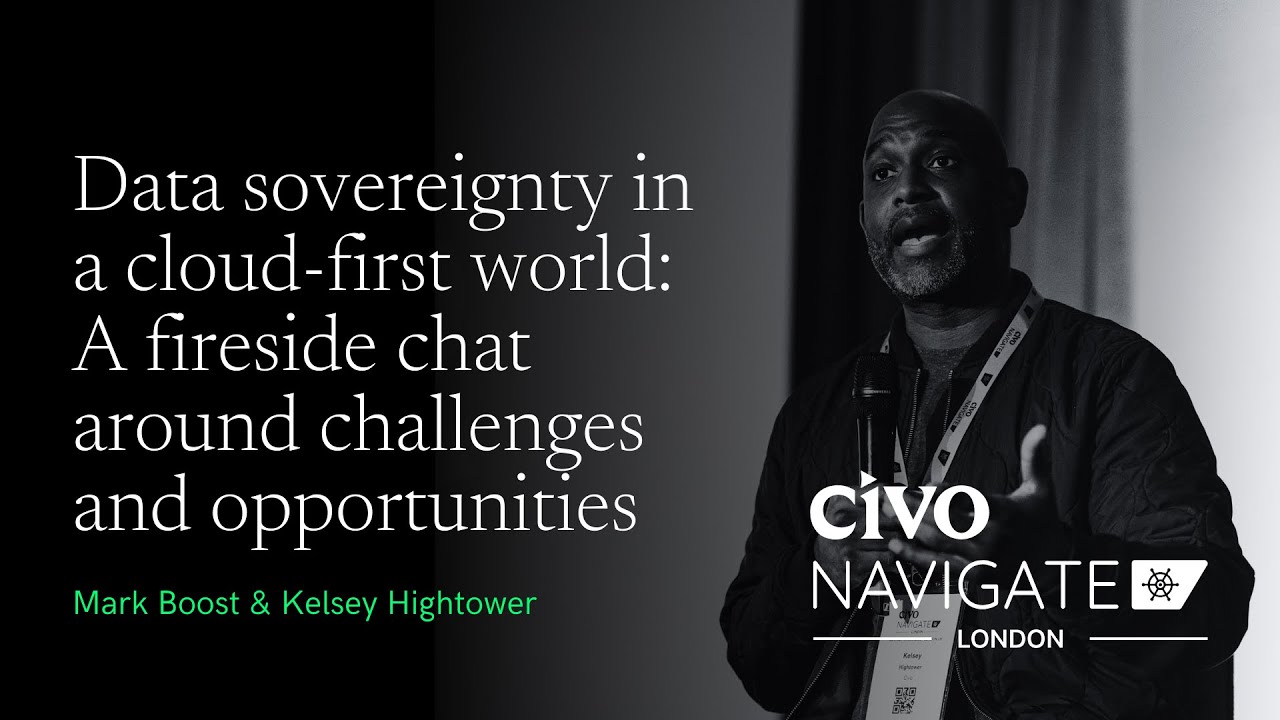
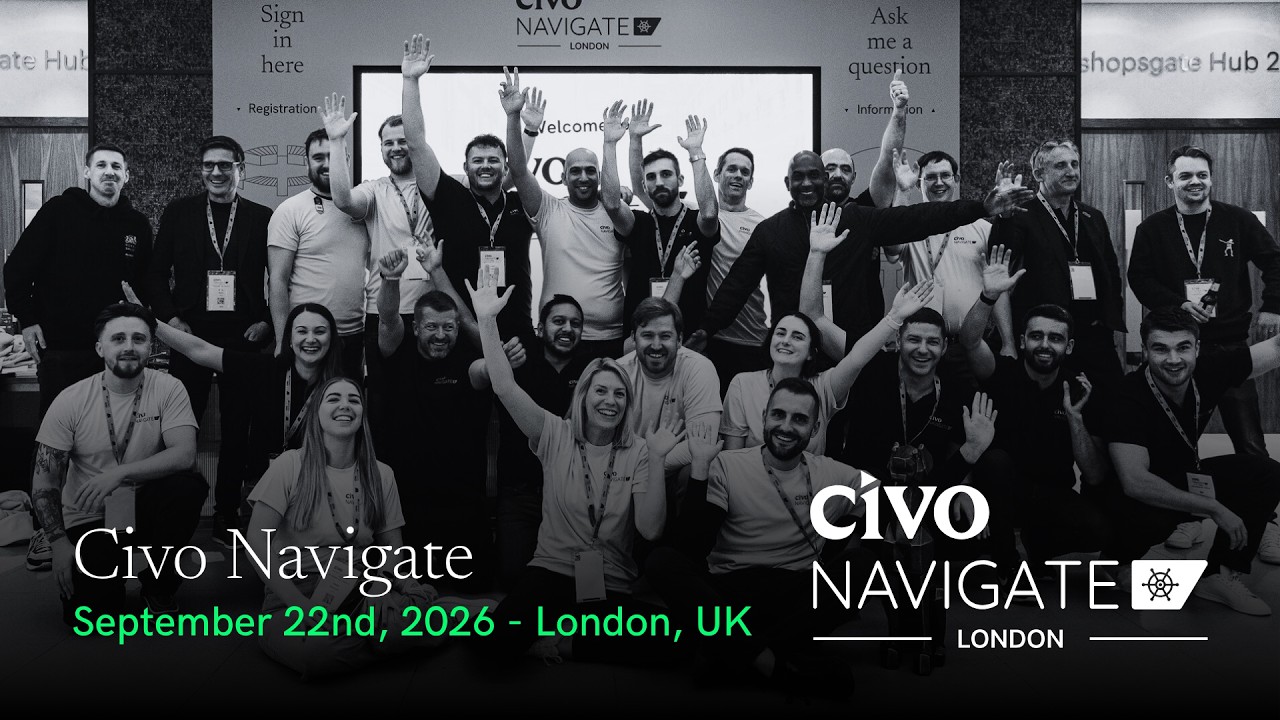
Civo Navigate London 2026 is one place where those conversations continue, bringing together 800+ developers, engineers, founders and technology leaders to explore AI, cloud-native technology, Kubernetes and digital sovereignty. With speakers including Kelsey Hightower and more than 20 industry experts across three technical tracks, it’s an opportunity to learn from the people building the infrastructure shaping what’s next.
Register for Civo Navigate London 2026
Join us in London for in-person access to expert-led sessions on AI, cloud innovation, and data sovereignty, and be part of the conversation shaping the future of tech.

Events Marketing Coordinator at Civo
Debora Tonet is the Events Marketing Coordinator at Civo, responsible for planning and executing events that bring the Civo community together, from meetups and conferences to partner activations and industry gatherings.
She brings over a decade of experience spanning creative direction, cultural strategy, branding, and digital storytelling. She is the founder of Black Girls in Fashion, a platform created to connect and amplify Black women in the fashion industry, through which she has led community strategy and content development with a focus on inclusion and impact. Her work has taken her into collaboration with organisations including the British Fashion Council and London Fashion Week.
Share this article

