Sovereignty over silence: Why Microsoft's data opacity is the real lock-in
Written by

Digital Marketing Executive at Civo
Written by
Digital Marketing Executive at Civo
The refusal by Microsoft to detail data flows to Police Scotland confirms the real price of hyperscale: control is an illusion. This incident isn't the problem. It’s the proof.
It proves the need for a new standard in cloud computing, one that prioritizes true digital sovereignty and architectural transparency. Sovereignty, after all, is all about the customer being able to exercise control over the IT resources they use.
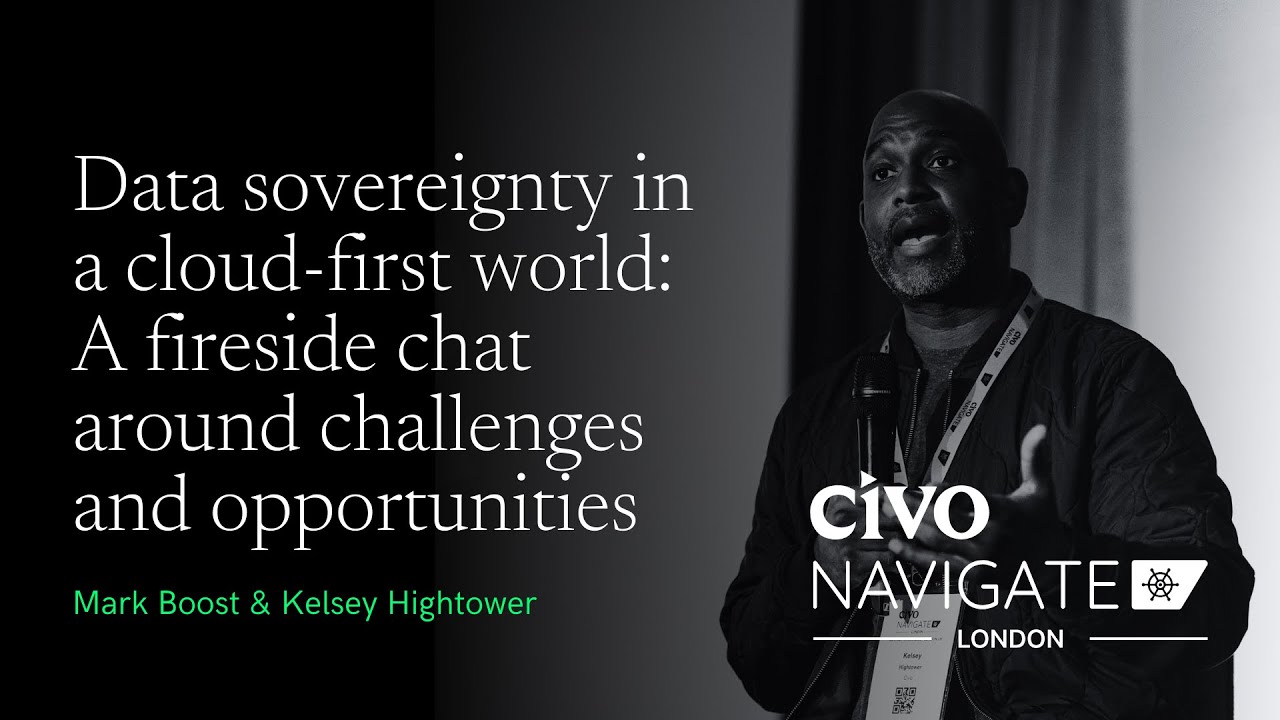
At Civo Navigate London 2025, Mark Boost and Kelsey Hightower took to the stage to speak about the future of sovereignty, cloud computing, and the impact of AI on the industry. Their discussion quickly shifted to the ”how and why companies need to regain control”.
To watch this full discussion, check out the recording below 👇
The market is overloaded with cloudy promises, but our research at Civo is clear:
43% of UK IT leaders explicitly say they do not trust Big Tech with their data.
The sovereign problem. The Microsoft admission
You shouldn't have to ask your vendor for a map of your own data. Yet, that's the core issue. Microsoft cites infrastructure complexity as their defense, but the reality is simpler: their opaque architecture serves their ultimate performance goals, not your governance needs. We call that sovereignty washing.
Speaking at Civo Navigate London 2025, Kelsey Hightower articulated the danger perfectly:
"I think the only thing worse than like lock in, is lock out, because maybe it's expensive, but when you don't even have it at all, that's exponentially worse."
Kelsey Hightower
The legal reality? When Anton Carniaux, Director of Public & Legal Affairs at Microsoft France, was asked if he could guarantee French citizen data would never be transferred to US authorities, his response was simple: “No, I cannot guarantee French data won’t be seized by US authorities.” (Under oath before the French Senate, June 2025)
That single admission shatters the illusion. When it comes to the CLOUD Act, you can't negotiate. You can only choose a transparent architecture.
Digital risk has officially become a political risk, and frankly, UK leaders deserve better than the old way of doing things. Control must trump convenience.
In our white paper on the digital sovereignty revolution, we found that 84% of UK IT leaders are concerned that geopolitical developments could threaten their ability to access and control their data. The concern is valid, but the execution is lagging: only 35% of organizations have full visibility into where their data is actually stored.
That lack of transparency? That's the real lock-in.
The AI workload is a discipline problem
The most demanding modern workload, AI, is now highlighting the costly mistakes of legacy cloud operations. AI models are brutally inefficient, punishing years of technical shortcuts.
With 68% of organisations only using AI services where they have complete certainty over data ownership, the push for sovereignty is directly tied to the future of responsible AI. Open-source solutions like Civo’s relaxAI are necessary for innovation that stays under your control.
The market is already moving forward, with 29% pursuing multi-cloud, and 31% are embracing hybrid models. As Kelsey Hightower explained:
"The thing about the AI workload, is that it punishes for bad habits."
Kelsey Hightower
If you’re running AI, you need to be efficient, and you need to be close to your data. Because, despite the promises of the past decade:
"Now, even the cloud providers want to move the compute to where the data is. Data gravity is still a real thing."
Trying to move massive proprietary AI workloads to distant, expensive hyperscale data centres is simply architecturally backwards. The future of efficient AI means moving compute to the data.
AI in our cloud, or yours?
Civo AI puts the power of the latest NVIDIA GPUs and multi-cloud control in your hands without cost, complexity, or lock-in. Work at the speed of your ideas, without draining your budget – and keep your data close, compliant, and completely under your control.
Reclaim your stack. Scale like you mean it
You don't have to wait for Microsoft to change its stripes. The solution is to switch to platforms built for your sovereignty demands, from the infrastructure up.
The good news? The market isn't static. As Jacob Rees-Mogg noted in a Civo Navigate panel discussion on digital sovereignty, "the unassailable positions become assailable as technology develops." Your choice is the force that breaks the oligopoly.
A sovereign cloud strategy is built on principles that directly counter hyperscale opacity:
- Guaranteed residency: Data lives exactly where you tell it to live. No ambiguity.
- Architectural transparency: You get clear visibility into the network paths. You own the audit.
- The power of choice: The ultimate form of sovereignty is the freedom to build and evolve on your own terms.
"The ability to move the needle without permission is a form of sovereignty."
Kelsey Hightower
Summary
The great cloud compromise, convenience for control, is over.
The refusal by Microsoft to disclose data flows proves you can't outsource sovereignty. The CLOUD Act and geopolitical volatility feed a trust deficit where 43% of leaders explicitly distrust their vendor.
Lighten the load with a sovereign cloud strategy. True resilience is now founded on transparent architecture and guaranteed data residency. This is the only way to transform digital risk into a foundation for confident growth and AI that stays under your control.
If you want to learn more about this topic, check out some of these resources:

Digital Marketing Executive at Civo
Emma Kinsey-Coates is a Digital Marketing Executive at Civo, focused on bringing the brand to life through creative storytelling and multimedia content. She leads the company’s visual strategy across Instagram and YouTube, producing high-impact video and social content that translates complex technical updates into engaging community experiences.
With a background in creative communications and graphic design, Emma manages Civo’s multimedia production, from webinar coordination to social-first video series. She also plays a key role in the company’s PR and awards initiatives, ensuring Civo’s innovations and industry achievements are recognized on a global stage.
Share this article