Inclusive AI vs. centralized AI: Can India avoid big tech concentration?
Written by
Digital Marketing Executive at Civo
Written by
Digital Marketing Executive at Civo
At the 2026 India AI Impact Summit in February 2026, 92 countries and international organizations (including the US, China, and the UK) signed a preliminary agreement that positions AI as both a development tool and a shared global responsibility.
“India will not be a mere consumer in the AI age. We will be the creators, the builders, and the exporters of intelligence and we are proud to be able to participate in that future.”
Gautam Adani, chairman of the Adani Group
With India becoming the defining infrastructure of the global economy, it’s important to understand who controls AI and who benefits from this growth. This sat at the heart of the New Delhi Declaration on AI Impact, which emphasizes equitable access, international cooperation, and the democratization of AI resources.
For India, this moment presents both an opportunity and a challenge: can it build an inclusive AI ecosystem, or will it fall into the familiar pattern of centralized, big-tech dominance?
What is inclusive AI?
Inclusive AI refers to the design, development, and deployment of artificial intelligence systems that are accessible, fair, and beneficial to a broad spectrum of society.
“Organizations that view AI as important to their competitive advantage are more than 40 percent more likely to be using open source AI models and tools than respondents from other organizations.”
Open source in the age of AI, McKinsey & Company 2025 report
Inclusive AI aligns strongly with the declaration’s emphasis on “wide-scale diffusion” and social empowerment, suggesting that AI should enhance participation in economic and civic life.
What can we learn from inclusive AI in India?
Ahead of the 2026 India AI Impact Summit, the World Economic Forum published a report on India’s AI journey, whereby they highlighted how AI-led initiatives, such as the open digital identity framework and the Unified Payments Interface (UPI), have transformed India’s financial inclusion by almost 30% in 10 years, which typically takes decades to achieve.
“By choosing openness over proprietary control, India demonstrates that transformative technologies can scale while remaining accessible to those who need them most. That same choice, applied to open source AI, could create a flowering of innovative outcomes.”
What the world can learn from India’s inclusive AI journey, The World Economic Forum
India’s experience shows that openness must be designed into systems from the start, not retrofitted later. The broader lesson is that inclusive AI is not just about fairness; it is a more resilient and scalable model for long-term innovation, particularly for countries seeking to avoid overdependence on centralized tech power.
What is centralized AI?
Centralized AI refers to systems where control over data, compute infrastructure, and model development is concentrated in a small number of entities, typically large technology companies or state-backed institutions. While centralized AI can drive rapid innovation due to scale and resources, it risks creating monopolistic dynamics, limiting competition, and reinforcing global inequalities.
Why is the discussion surrounding inclusive and centralized AI important for India?
For India, the inclusive versus centralized AI debate is not theoretical; it directly shapes economic competitiveness and digital sovereignty. With its scale of population, linguistic diversity, and rapidly digitising economy, India stands to gain significantly from AI-driven productivity gains.
However, if access to advanced models, compute infrastructure, and training datasets remains concentrated among a small number of global providers, India risks becoming a downstream consumer of AI rather than a producer of it. As an overview, if India relies heavily on external AI platforms or allows domestic markets to consolidate around a few players, it risks:
- Becoming dependent on foreign AI infrastructure
- Limiting local innovation ecosystems
- Exacerbating inequality between urban and rural regions
The role of sovereignty in India
Sovereignty in the Indian context is a strategic tool for autonomy rather than a move toward isolation. It the ability to participate in global AI systems on equitable terms while maintaining control over critical layers of the technology stack. This includes ensuring that domestic innovation is not structurally dependent on a small number of foreign platforms, and that public-interest AI applications can be developed without external bottlenecks.
In this sense, sovereignty becomes closely linked with inclusivity: the more distributed and accessible the AI ecosystem is, the stronger India’s capacity to shape its own digital future.
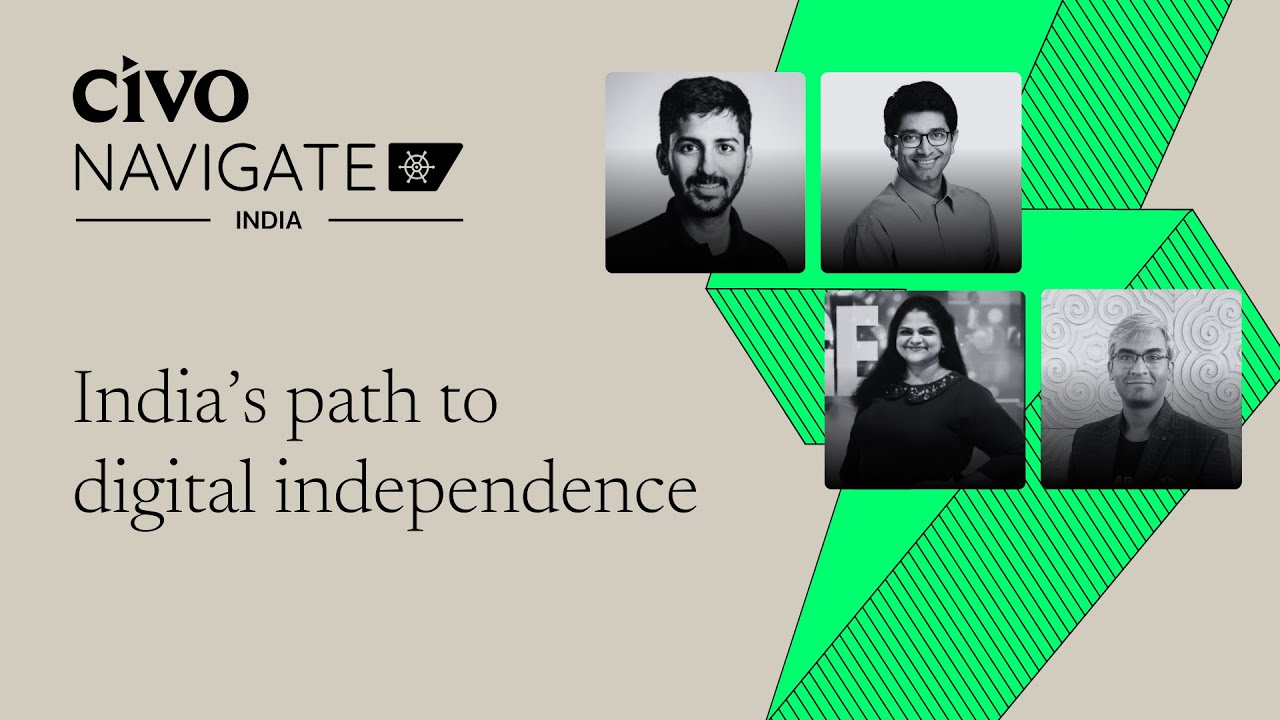
How can Civo help?
Civo supports organizations in building AI and cloud infrastructure with a focus on performance, transparency, and reduced dependency on hyperscale lock-in. By providing modern cloud environments and Kubernetes-native infrastructure, Civo enables teams to deploy and scale workloads without being constrained by complex or monopolized ecosystems.
Discover the Civo India Sovereign Cloud
Our India-based team is dedicated to providing localized, expert support. With cloud specialists, support engineers, and account managers based in India, we aim to provide infrastructure that aligns with the needs of Indian businesses building modern AI and cloud-native applications.
Find out more by clicking here!
FAQs
Digital Marketing Executive at Civo
Emma De Guzman is a Digital Marketing Executive at Civo, responsible for managing the company’s day-to-day digital marketing and content strategy. Her work includes overseeing blog content, thought leadership, product launch materials, and email campaigns, as well as managing social media across LinkedIn and X.
She also works closely with partners on co-marketing initiatives such as webinars, joint content, and customer case studies. In addition, Emma manages the Civo Write-For-Us program, working with external contributors and independent writers to review, edit, and publish technical tutorials and guides.
Share this article