Why data sovereignty has become a strategic imperative for India
Written by
Digital Marketing Executive at Civo
Written by
Digital Marketing Executive at Civo
Data is the backbone of the modern economy, but if you don’t have control of the infrastructure, you don’t control the data. Historically, data sovereignty was a compliance checkbox, something for the legal team to handle. Today, it’s a strategic national priority.
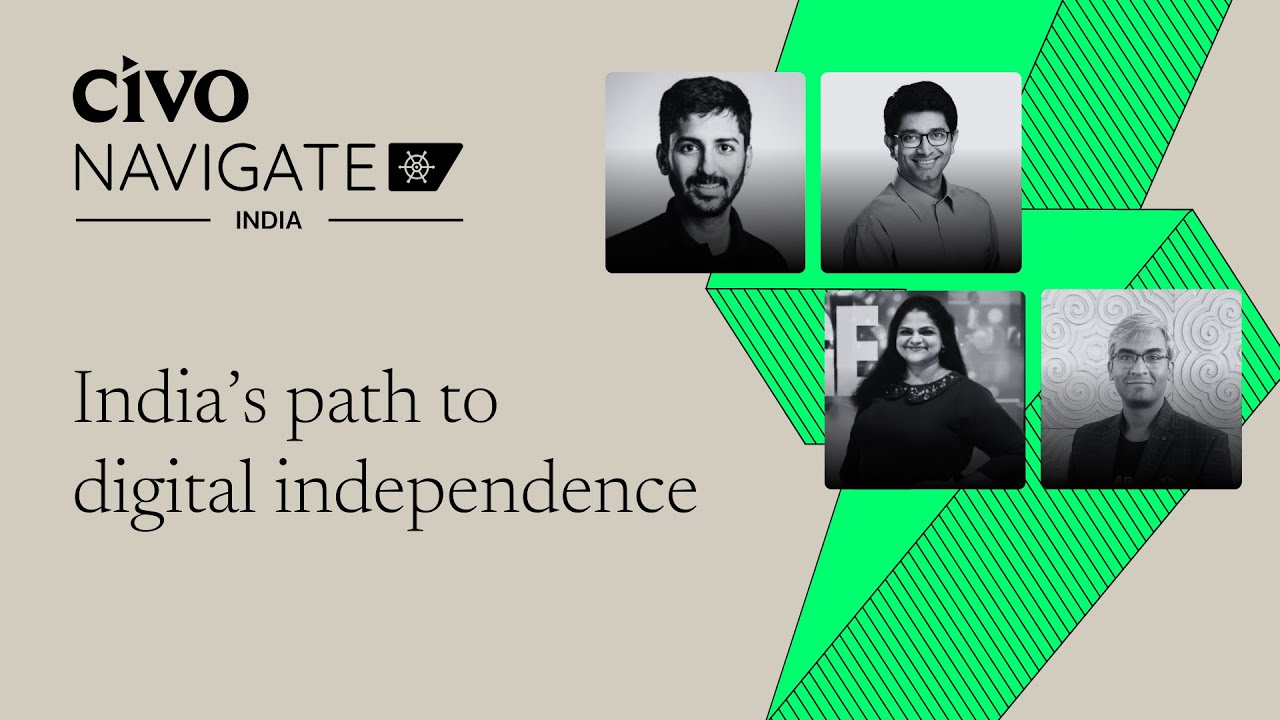
At Civo Navigate, we sat down with industry experts to unpack why India is now placing sovereignty at the centre of its digital strategies.
Beyond the region: Sovereignty vs Residency
The definition of sovereignty is often misunderstood. Our panelists argued that simply ticking a box for GDPR or the Digital Personal Data Protection (DPDP) Act isn’t enough. Sovereignty is about long-term utility and the safety of India’s digital assets.
“We have been speaking about data being the new oil, the new currency, for the longest time. Everything is getting digitalized - all of us have data with every picture, every click, and we want to ensure that this data is safe and ready for use when we want it to be used by the people we use.”
Deepthi Anantharam
At its core, data sovereignty is about control: who governs your data, under what laws, and with what recourse if access is withdrawn.
“For me, data sovereignty is all about control. It’s all about the control of your data within your own controllable boundaries and how you handle and process it.”
Toshal Khawale, Managing Director at PwC
One of the most important distinctions raised during the discussion was the difference between data residency and data sovereignty. Many hyperscale cloud providers offer “India regions” and local data storage, but this does not automatically guarantee sovereign control.
“Any organization that doesn’t operate exclusively in the Indian jurisdiction, or doesn’t adhere to let’s say Indian norms and laws, or primarily needs to rely on another jurisdiction, and then the Indian organization's subsidiary, these are the things we can’t get away with.”
Rahul Poruri, CEO of Foss United Foundation
Under legislation such as the US CLOUD Act, American-headquartered providers can be compelled to share data with their home government, regardless of where that data is physically stored. This creates a structural tension for organizations operating in regulated sectors like financial services, healthcare, and critical infrastructure. Sovereignty is not just about trusting a provider’s technical controls; it’s about the legal frameworks that sit above them. To address this problem, the Indian government has reinforced regulations that ensure critical data remains within local borders, such as:
- The Information Technology Act, 2000
- The Digital Personal Data Protection Act, 2023 (formerly the PDP Bill, 2019)
These laws emphasize that businesses must ensure critical and sensitive data remains within India’s borders and under local jurisdiction.
Reclaiming the value of India data
India’s push toward sovereignty is rooted in economic reality. As one of the world’s largest digital markets, India generates vast volumes of data across payments, healthcare, e-commerce, mobility, and AI-driven services. Yet today, much of the value created from this data does not remain within the country. While Indian users and enterprises generate and consume data at unprecedented scale, the platforms that process, analyze, and monetize it are often hosted and owned elsewhere. This imbalance is a key driver behind India’s sovereignty ambitions.
“Look at the amount of data we are generating on a daily basis… India is one of the largest consumers of anything in the world. All top companies across the globe are here and trying to get insights into whatever we are consuming. We have the biggest market in the world, and that becomes a very critical economic aspect when it comes to consumption…
When it comes to actually using those services and what we are using, such as SaaS products, they are hosted somewhere else. So, all that revenue we are actually spending is going outside of India.”
Toshal Khawale, Managing Director at PwC
At the same time, the panel was clear that sovereignty does not mean isolation. India’s growth as a digital economy has been shaped by openness, global collaboration, foreign direct investment, and access to international markets and technologies. The challenge lies in balancing these forces without compromising long-term autonomy.
“We need to collaborate globally. We need to bring in the foreign direct investments… We can’t lock ourselves out from the rest of the world. Having said that, we should establish what is ours very well, from sensors to everything else.”
Deepthi Anantharam
Ultimately, India’s motivation for pursuing data sovereignty reflects a broader ambition: to move from being the world’s largest digital market to one of its most influential digital producers.
The 5-year outlook: From adoption to innovation
Looking ahead, the panel expressed cautious optimism. India is already a global heavyweight in open-source contribution, and government initiatives around data centres, skilling, and regional infrastructure development are laying the groundwork. But infrastructure alone isn’t enough. Sustained success depends on a cultural shift from adoption to innovation. Competing with the sheer scale of investment seen in the US and China will require a long-term commitment from both industry and policymakers.
“I see a very bright future for the next 5 years in terms of data sovereignty. I think the one thing that we should as an industry continue to do is to be more consistent in terms of the solutions we are offering… So, being consistent, looking at the cost and then having the right support from the Government policies will definitely take us through the next 5 years to a position where we’ll be able to compete with the global players as well.”
Toshal Khawale, Managing Director at PwC
The mandate for a sovereign future
The overarching message from the discussion was clear: data sovereignty is no longer optional. In an era defined by AI, cloud concentration, and geopolitical uncertainty, countries that fail to assert control over their digital foundations risk losing more than just data, they risk losing their economic agency. For India, the opportunity is significant… but so is the responsibility. By combining sovereign infrastructure, open innovation, global collaboration, and policy clarity, India has the potential not just to protect its digital future but to help shape the global conversation around it. At Civo, we understand that sovereignty and compliance are the foundation of trust. Our India Sovereign Cloud is built to give businesses the control they need, ensuring that their data remains protected and within Indian jurisdiction.
Discover the Civo India Sovereign Cloud
Our India-based team is dedicated to providing you with localized, expert support. With a skilled group of cloud specialists, support engineers, and account managers based in India, we’re committed to ensuring a smooth experience tailored to the unique needs of Indian businesses.
Digital Marketing Executive at Civo
Emma De Guzman is a Digital Marketing Executive at Civo, responsible for managing the company’s day-to-day digital marketing and content strategy. Her work includes overseeing blog content, thought leadership, product launch materials, and email campaigns, as well as managing social media across LinkedIn and X.
She also works closely with partners on co-marketing initiatives such as webinars, joint content, and customer case studies. In addition, Emma manages the Civo Write-For-Us program, working with external contributors and independent writers to review, edit, and publish technical tutorials and guides.
Share this article