
2026 insights into the Indian cloud market
Written by
Digital Marketing Executive at Civo
Written by
Digital Marketing Executive at Civo
India is no longer just a fast-growing cloud market; it is becoming a strategically vital one. What was once a race for cost efficiency and global hyperscaler expansion has evolved. Today, India’s cloud landscape is being reshaped by a new reality: the need for AI infrastructure, true data sovereignty, and the ambition to own its digital future.
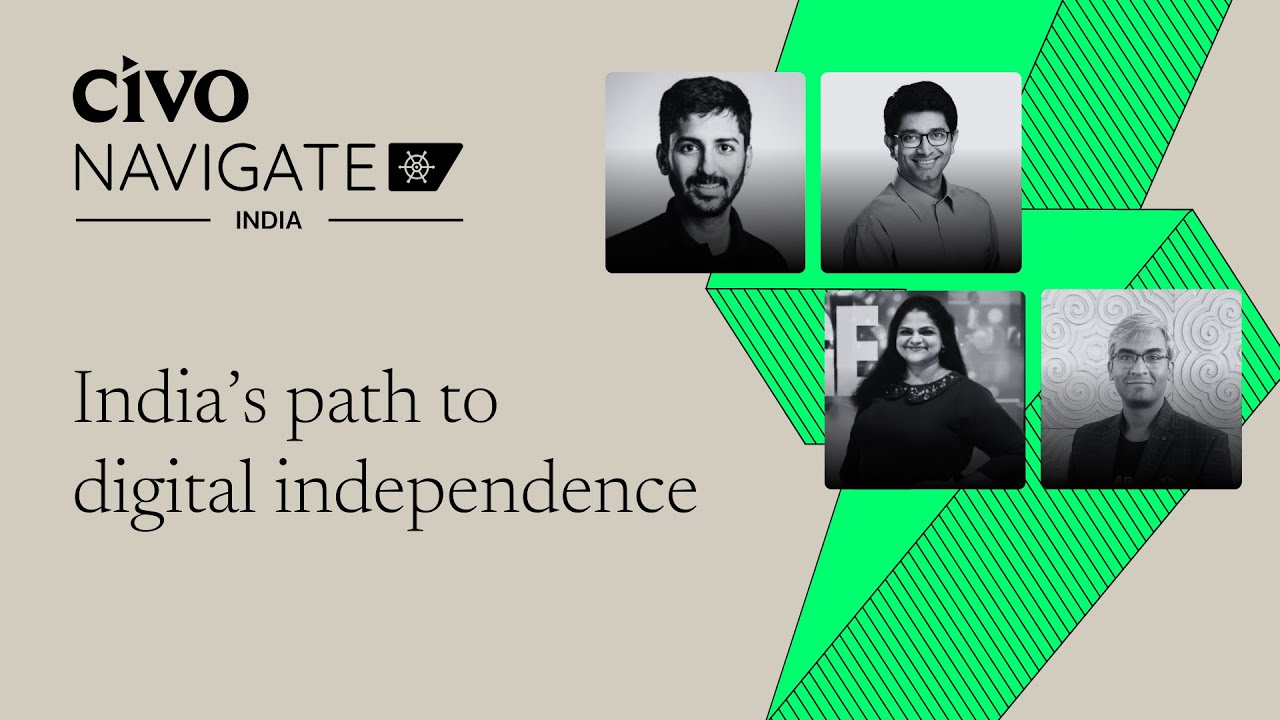
Following the discussion at Civo Navigate India 2025, one thing is clear: the status quo is shifting. Below are five key insights into where the Indian cloud market stands today, and where we’re heading next.
1. Sovereignty is a strategy, not a checkbox
One of the clearest themes to emerge during Civo Navigate India was that data sovereignty is no longer viewed as a regulatory hurdle; it has become a strategic consideration for organizations operating in India.
Historically, conversations around sovereignty focused on compliance, meeting data localization requirements or aligning with emerging legislation such as the Digital Personal Data Protection Act, 2023 (DPDP Act). Today, the discussion is broader and more commercial. Enterprises are asking the hard questions: Who ultimately controls our data? Which jurisdictions apply? And what happens if access to critical services is disrupted by geopolitical or legal decisions beyond India’s borders.
This shift reflects a growing awareness that data is an economic asset, not just a technical one. As India generates vast volumes of data across payments, healthcare, retail, and AI-driven services, retaining control over how that data is stored, processed, and monetised is central to long-term competitiveness.
Cloud providers that offer local governance, not just a local data center, are the ones winning the trust of mission-critical workloads.
“I see a very bright future for the next 5 years in terms of data sovereignty. I think the one thing that we should as an industry continue to do is to be more consistent in terms of the solutions we are offering… So, being consistent, looking at the cost and then having the right support from the Government policies will definitely take us through the next 5 years to a position where we’ll be able to compete with the global players as well.”
Toshal Khawale, Managing Director at PwC
2. India is data-rich, but the value is still being exported
India produces more digital data than almost anywhere in the world. Yet, most of the economic value from that data continues to flow elsewhere.
A recurring observation from industry leaders is that while Indian enterprises and consumers generate enormous insights through their usage of SaaS platforms, AI tools, and digital services, the infrastructure and platforms capturing that value are often owned and operated outside the country. This creates an imbalance: data is created locally, but economic returns are realised globally.
“Look at the amount of data we are generating on a daily basis… India is one of the largest consumers of anything in the world. All top companies across the globe are here and trying to get insights into whatever we are consuming. We have the biggest market in the world, and that becomes a very critical economic aspect when it comes to consumption…
When it comes to actually using those services and what we are using, such as SaaS products, they are hosted somewhere else. So, all that revenue we are actually spending is going outside of India.”
Toshal Khawale, Managing Director at PwC
The cloud market sits at the centre of this challenge. Infrastructure decisions determine where data lives and who benefits from downstream innovation. This is why sovereign cloud and AI platforms are gaining momentum—not as a rejection of global providers, but as a way to ensure India’s economic value remains within India’s technology ecosystem.
3. AI is reshaping cloud demand, not just cloud workloads
AI isn’t just adding new workloads to the cloud; it’s exposing the limitations of old cloud models.
As Indian enterprises move from AI experimentation to production, this brings new requirements around latency, performance, data locality, and cost predictability. At the same time, generative AI and automation are pushing compute closer to users and, in some cases, into physical environments through robotics and edge deployments.

This evolution is particularly relevant for India. With strengths in hardware manufacturing, a growing semiconductor ecosystem, and an expanding robotics sector, the convergence of AI and cloud infrastructure presents new opportunities beyond traditional data centre models.
“I think there’s an amazing opportunity that is unique to India where you could have data centers that you own and operate, and build. You could have models that you won and operate, and build. You could actually serve them across. There is an opportunity here for an entire supply chain that comes through. You need to make sure that international investment lands in the right places, and the way you do that is you listen to the Indian market and listen to what it needs and make sure that you’re responding to those needs.”
Josh Mesout, Chief Innovation Officer at Civo
Rather than relying solely on centralized hyperscale architectures, organizations are exploring hybrid, distributed, and locally optimized cloud environments that better support AI-driven applications. Providers that can support these architectures, while maintaining compliance and performance, are likely to see increased demand.
4. Open source: The foundation, not “Plan B”
Open source is no longer just a cost-saving alternative. In India, it’s becoming the foundation of digital resilience.
“In the Indian market, we are starting to see the parity between open and closed source. As a whole, I am really excited for the whole wave of models coming out of India and India's role in open source. The impact of this will be similar to how Linux came to disrupt the way we build infrastructure. I think these open source models will do something in a very similar way.”
Josh Mesout, Chief Innovation Officer at Civo
Proprietary platforms are losing their luster for organizations concerned with vendor lock-in and jurisdictional risk. Open architectures offer tangible advantages: transparency and flexibility.
India already plays a significant role in the global open-source community, and this momentum is extending into AI models, cloud-native platforms, and developer tooling. While closed-source solutions will continue to have a place, the expectation is that parity between open and closed models will continue to improve.
For cloud providers and enterprises alike, the implication is clear: future-ready platforms must support open standards and interoperability, rather than forcing rigid dependencies.
5. The future belongs to the balanced
India’s cloud strategy isn’t about isolationism; it’s about strategic balance.
The consensus from Navigate India was clear: India must continue to collaborate globally and attract foreign investment. But it must also define which parts of the digital stack, critical infrastructure and foundational AI, must remain under national control.
“We need to collaborate globally. We need to bring in the foreign direct investments… We can’t lock ourselves out from the rest of the world. Having said that, we should establish what is ours very well, from sensors to everything else.”
Deepthi Anantharam
Sovereignty does not mean building everything domestically at any cost. It means making deliberate choices about ownership. Cloud providers that offer a local presence, strong compliance, and high performance without compromising openness, are likely to align most closely with India’s long-term ambitions.
Discover the Civo India Sovereign Cloud
Our India-based team is dedicated to providing you with localized, expert support. With a skilled group of cloud specialists, support engineers, and account managers based in India, we’re committed to ensuring a smooth experience tailored to the unique needs of Indian businesses.
What this means for the Indian cloud market
India’s cloud market has matured. Enterprises are no longer choosing platforms based solely on price or scale; they are evaluating control, transparency, performance, and strategic alignment.
Success in 2026 India will depend on local investment, regulatory fluency, and the ability to support AI-native workloads at scale. The “one-size-fits-all” cloud is over. The era of the sovereign balanced cloud has begun.
If you want to learn more about the Indian cloud market, check out some of these resources:
Digital Marketing Executive at Civo
Emma De Guzman is a Digital Marketing Executive at Civo, responsible for managing the company’s day-to-day digital marketing and content strategy. Her work includes overseeing blog content, thought leadership, product launch materials, and email campaigns, as well as managing social media across LinkedIn and X.
She also works closely with partners on co-marketing initiatives such as webinars, joint content, and customer case studies. In addition, Emma manages the Civo Write-For-Us program, working with external contributors and independent writers to review, edit, and publish technical tutorials and guides.
Share this article

